Bio
I am an Applied Research Scientist in AI Trust & Safety at the Alberta Machine Intelligence Institute (Amii), with over 5 years of experience across industry and academia.
I lead research at the intersection of reinforcement learning and AI safety. My work spans two complementary tracks: using RL as a diagnostic and offensive tool to systematically audit and defend frontier large language models against adversarial jailbreaking, and addressing foundational failure modes within RL agents themselves — including epistemic uncertainty, partial reward observability, non-stationarity, and continual learning constraints.
I completed my PhD in Computing Science at the University of Alberta, advised by Prof. Michael Bowling, where my dissertation introduced the Monitored MDP framework — a principled treatment of reinforcement learning under partially observable reward signals — along with algorithms for cautious, robust decision-making in novel and out-of-distribution environments.
Prior to academia, I spent three years as an AI Engineer at SonyAI in Tokyo, contributing to the ACE table-tennis robot project — a system that achieved professional-level play and resulted in a Nature publication. My work there spanned multi-agent simulation, sim-to-real transfer, and real-time robot control integration.
My research has been published in TMLR, AAMAS, and RLC, and I collaborate closely with the Canadian AI Safety Institute (CAISI), the Canadian Institute for Advanced Research (CIFAR), and the National Research Council of Canada (NRC).
Research Vision
Looking ahead, my research agenda centers on building agents that continuously learn and adapt from real-world experience, moving beyond the idealized assumptions of traditional MDP formulations that rarely hold outside labs and simulations. I am particularly interested in settings where partial reward observability and non-stationarity are the rule rather than the exception, and in developing the principled foundations that let agents navigate these conditions reliably. Across all of this, I hold as a core constraint that deployed agents must remain safe — not just in the moment, but throughout their operational lifetime — to themselves, to the humans who depend on them, and to the broader environment they inhabit.
Updates
- Jul 2026Two workshop papers accepted at the Agents in the Wild: Safety, Security, and Beyond Workshop, ICML 2026: "A Systematic Investigation of The RL-Jailbreaker in LLMs" and "AI Agent Safety is a Reinforcement Learning Problem."
- Jul 2026Paper Generalization in Monitored Markov Decision Processes (Mon-MDPs) accepted at the Reinforcement Learning Conference (RLC) 2026, Montreal, Canada.
- Apr 2026Contributed to the ACE table-tennis robot project at SonyAI, which resulted in a Nature publication on a system capable of defeating professional players.
- Dec 2025Completed PhD in Computing Science at the University of Alberta. Thesis: Reinforcement Learning with Partially Observable Rewards.
- Oct 2025Paper Learning to Be Cautious published in Transactions on Machine Learning Research (TMLR).
- Jul 2025Joined the Alberta Machine Intelligence Institute (Amii) as an Applied Research Scientist in AI Trust & Safety.
- May 2025Received the Andrew Stewart Memorial Graduate Prize from the University of Alberta (5,000 CAD).
- May 2024Presented Monitored Markov Decision Processes at AAMAS 2024, Auckland, New Zealand.
- Jan 2024Received the Graduate Student Engagement Scholarship (GSES) from the University of Alberta (10,000 CAD).
- Jan 2023Received the Graduate Student Engagement Scholarship (GSES) from the University of Alberta (10,000 CAD).
- Jan 2022Started PhD at the Computing Science Department, University of Alberta, advised by Prof. Michael Bowling.
- Jun 2020Joined SonyAI as an AI Engineer in Tokyo, Japan.
Work Experience
Edmonton, Canada · July 2025 – Present
- Research Strategy: Establishing Amii's safety research dual-track strategy using RL for risk assignment in generative models, and mitigating structural RL safety (uncertainty, non-stationarity, partial reward observability).
- Technical Collaboration: Partnering with Cohere and national institutes — Canadian AI Safety Institute (CAISI), CIFAR Medical AI Working Group, Mila, the Vector Institute, and the National Research Council (NRC).
- Academic Outreach: Directed a 10-session technical AI safety track for Amii's annual Upper Bound conference, serving an audience of over 11,000 attendees.
- Team Building: Hired a Research Scientist and an ML Engineer while overhauling the technical interviews framework now adopted by Amii.
Tokyo, Japan · June 2020 – Oct 2020 & Jan 2021 – Oct 2022
- Robotics Research: Contributed to the ACE table-tennis robot team capable of defeating professional players, resulting in a Nature publication.
- RL Policy: Trained RL policies for targeted, high-precision ball returns and led the technical sub-team for robot serving.
- Sim-to-Real & System Integration: Built multi-agent simulation environments using self-play and goal-conditioned RL, successfully transferring trained policies onto real-time robot control loops.
Edmonton, Canada · February 2020 – December 2020
- Formulated a novel robust optimization framework enabling autonomous agents to learn cautious behaviors in novel, out-of-distribution states, supervised by Prof. Michael Bowling.
Tokyo, Japan · July 2019 – January 2020
- Designed an RL environment and trained policies using imitation learning to acquire complex cooking skills from chef demonstrations, successfully deploying the models on physical robots.
Publications
Peer-Reviewed Journal Articles
-
Montaser Mohammedalamen, Dustin Morrill, Alexander Sieusahai, Yash Satsangi, and Michael Bowling,
"Learning to Be Cautious,"
Transactions on Machine Learning Research (TMLR), 2025.
paper | code | bibtex | talk
Refereed Conference Publications
-
Montaser Mohammedalamen and Michael Bowling,
"Generalization in Monitored Markov Decision Processes (Mon-MDPs),"
Reinforcement Learning Conference (RLC), Montreal, Canada, 2026.
arXiv | code | bibtex | talk -
Simone Parisi, Montaser Mohammedalamen, Alireza Kazemipour, Matthew E. Taylor, and Michael Bowling,
"Monitored Markov Decision Processes,"
International Conference on Autonomous Agents and Multiagent Systems (AAMAS), Auckland, New Zealand, 2024.
paper | code | bibtex | talk
Workshop Papers & Preprints
-
Montaser Mohammedalamen, K. Roice, R. McLean, A. Lefaivre Škopac,
"A Systematic Investigation of The RL-Jailbreaker in LLMs,"
Agents in the Wild: Safety, Security, and Beyond Workshop, ICML, 2026.
arXiv -
R. McLean, T. E. Lee, Montaser Mohammedalamen, K. Roice, G. Berseth, P. M. Pilarski, M. C. Machado, A. Lefaivre Škopac, B. Rosman,
"AI Agent Safety is a Reinforcement Learning Problem,"
Agents in the Wild: Safety, Security, and Beyond Workshop, ICML, 2026.
paper - Montaser Mohammedalamen, Michael Bowling, and Matthew E. Taylor, "Learning To Be Cautious for Industrial Chemical Control," Under review.
-
D. Khamies, Montaser Mohammedalamen, and B. Rosman,
"Transfer Learning for Prosthetics Using Imitation Learning,"
Black in AI Workshop, NeurIPS, 2018.
arXiv | code | bibtex
Theses
-
Montaser Mohammedalamen,
"Reinforcement Learning with Partially Observable Rewards,"
PhD Thesis, University of Alberta, 2026.
thesis - Montaser Mohammedalamen, "Learning Actions Representation In Reinforcement Learning for Safe Exploration," Master's Thesis, 2019.
Education
Rwanda · Sep 2018 – Sep 2019
- Performance: Overall score 75%
- Advisor: Prof. Benjamin Rosman
Sudan · Aug 2013 – Sep 2018
- Performance: First Class Honors (Ranked 3rd in the Electronics department, CGPA 7.5/10)
Scholarships & Awards
Falling Walls Lab Finals, Berlin, Germany
Nov 2017
IEEE Sudan Section
Oct 2016 · Ranked 5th in Sudan, 988th of 2,500 teams globally
Electrical & Electronics Engineering Students Exhibition (EEESE)
2015–2016 · Awarded consecutively for two years
Projects
Ongoing
- Tech Lead, developing a three-stage optimization framework that reframes generative model jailbreaking as a sequential decision problem. The system structurally decomposes environmental and algorithmic components to isolate the core drivers of adversarial success, scales exploitation pipelines across multi-modal action spaces (text, vision, and audio), and embeds these insights into a unified two-player zero-sum game.
- Generalized the "learning to be cautious" framework to continuous action spaces, extending its mathematical applicability to high-dimensional, safety-critical settings. Validated on complex chemical process control benchmarks, bridging the gap between theoretical safe RL and real-world industrial deployments.
- Investigating structural mechanisms of plasticity loss within Mon-MDPs to preserve agent adaptability during continual learning. Analyzing how the dual-learning architecture compounds long-term performance degradation, and formulating a systematic framework to evaluate intrinsic vulnerabilities while adapting regularization and reset mitigation strategies.
Previous
Minimax regret framework making agents learn conservative behavior in out-of-distribution states. Published in TMLR 2025.
code
A wheelchair robot that helps disabled people move using EEG signals from the brain.
code
RL Prosthetics controller that learns to walk like humans, accelerated with Imitation Learning.
code
Professional Service
Reviewing
2024 – Present
2026
2025 & 2026
2025 & 2026
Organization & Committee
2025 & 2026
2026
2026
Talks & Media
Talks
Conference Talk — Reinforcement Learning Conference (RLC)
Montreal, Canada · 2026
watch paper code
Paper Talk — Transactions on Machine Learning Research (TMLR)
2025
watch paper
Conference Talk — AAMAS 2024
Auckland, New Zealand · May 2024
watch paper
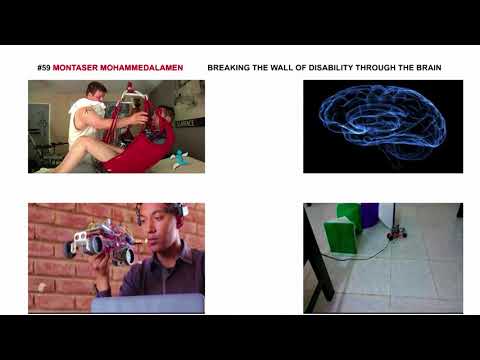
Falling Walls Lab Finals
Berlin, Germany · Nov 2017 · Audience Prize Winner
watch
Volunteering
Dec 2019 – Present
- Co-founded an initiative building AI capacity locally, connecting resources to regional engineering candidates.
Dec 2019 – Present
- Mentoring undergraduate students at the University of Khartoum on custom baseline RL graduation projects.
Apr 2016 – Aug 2016
- Established the first hackathon event in Sudan, coordinating 28 student researchers from 7 distinct universities.
University of Khartoum · Aug 2015 – July 2016
Certifications
Project Management
Project Management Institute (PMI) · Course completed; exam scheduled
Contact
The best way to reach me is by email.
Mentorship
If you are a student looking for mentorship in RL, AI safety, Robotics, Continual Learning, or research in general — please feel free to reach out by email. I am happy to chat and share advice where I can.
Teaching
Experimental Mobile Robotics (COMP 412/503) · Edmonton, Canada · Jan 2023 – May 2025
- Coordinated the TA team, managed grading frameworks, and oversaw lab infrastructure for a mixed cohort of senior undergraduate and graduate students.
- Designed and developed 8 comprehensive lab modules for 35 students using Duckietown to demonstrate physical robotic control.
- Instructed students on core robotics principles, including basic kinematics, ROS commands, P/PD/PID controllers, computer vision integration, and ML-based traffic sign detection.
- Mentored students through a capstone final project implementing an end-to-end autonomous driving pipeline featuring lane tracking, obstacle avoidance, and traffic rule navigation.
- Delivered specialized guest lectures on RL in robotics alongside career development strategies for industry internships.